Hire a bookkeeper: in-house or outsourced cost sheet
- Monthly saving from outsourcing at the quote (negative means in-house is cheaper)
- $210
- Computed on this page from the inputs below
- In-house cost a month, wage plus on-costs plus software
- $660
- Computed on this page from the inputs below
- In-house over a year
- $7,920
- Computed on this page from the inputs below
- The quote over a year
- $5,400
- Computed on this page from the inputs below
The record-keeping periods these pages cite are the IRS's published figures; every fee, hour and rate is arithmetic on the numbers you typed, and no figure on this site is a published national price for bookkeeping, because there is none.
Email me this result
We will send you these figures and a link back to them. One email, nothing else unless you tick the box.
These figures are a worked example ($210) for one small business; type your own counts and the quote-side arithmetic follows.
Download the Hire a bookkeeper: in-house or outsourced cost sheet worked example (CSV)
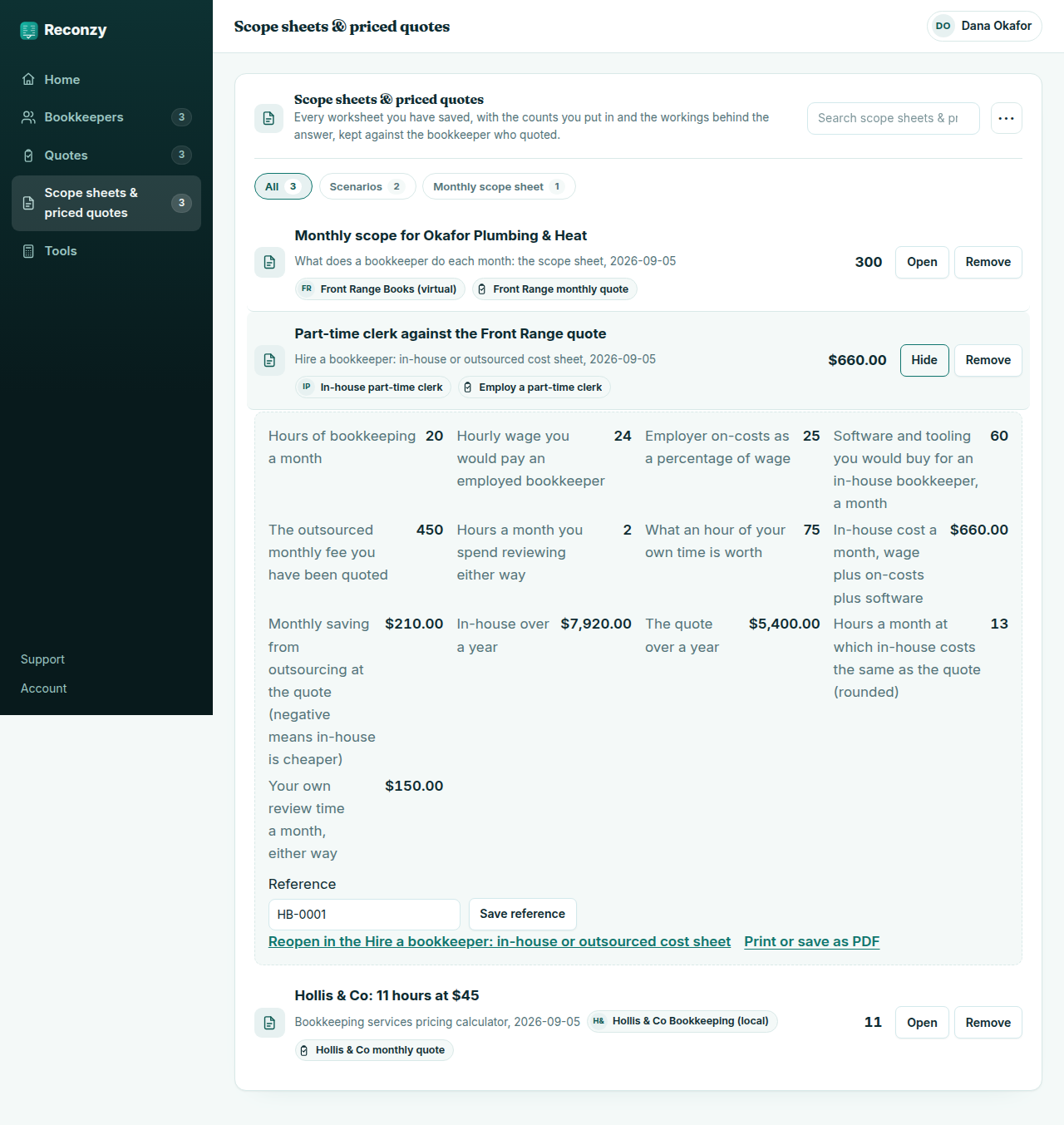
The question behind hire a bookkeeper is usually which kind: an employee on the payroll, or an outsourced service on a monthly fee. This sheet costs the two against each other from your own figures. Put in the hours of bookkeeping a month (the scope sheet on this site works that out), the hourly wage you would pay an employee, the employer on-costs as a percentage, the software you would buy them, and the outsourced fee you have been quoted, and it shows the monthly and annual cost of each, the saving or loss from outsourcing, and the hours a month at which the two cost the same. It also prices your own review time, which is the same either way and is often the figure the decision turns on.
What an owner comparing bookkeeping quotes asks about the Hire a bookkeeper: in-house or outsourced cost sheet
What should I put for employer on-costs?
Payroll taxes, benefits, paid leave and the desk and equipment, as a percentage of wage. The worked example uses a mid-range figure for a part-time clerk; replace it with what your payroll provider tells you your on-costs actually are.
The sheet says in-house is cheaper. Is that the answer?
It is the cost answer for the hours you entered. An employee also needs managing, covering when away and replacing when they leave, none of which is in the wage line. The break-even hours figure tells you how much scope you need before an employee pays; below it, the quote usually wins.
Why is my own review time on the sheet?
Because you will review the books whoever keeps them, and the hours are the same. It is shown so that it is not mistaken for a saving from either option.